
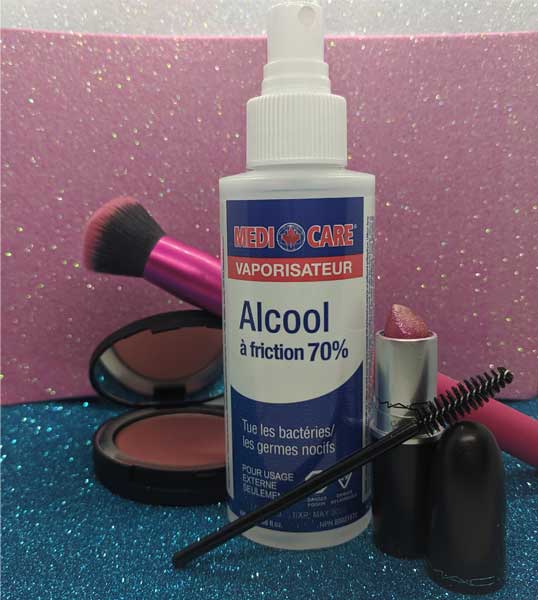
Your makeup tools are the most important when it comes to doing makeup on yourself or even clients. Just like they say your tools of the trade need to be kept clean and the main way is to sanitize them.
So, how to sanitize your makeup?
- Why is it important to sanitize your makeup
- Can you sanitize mascara
- How can you sanitize used lipstick
- Sanitizing pressed pigmented makeup
- Lip Liners and retractable lip liner pencils
- Liquid makeup Liquid foundations and highlighters
- How to sanitize Cream Formulations
- Eyeliners
- Brushes
- Sponges
- Makeup palettes and spatulas
- Sanitizing False Eyelashes
Why Is It Important To Sanitize Your Makeup
When it comes to makeup whether it be your own or for a makeup freelance kit the one big role that should be considered is that the products should always be sanitized. Cross-contamination between products makes it the perfect breeding ground for bacteria to grow and spread. Some of the common problems that may occur if sanitary practices are put into place are
Eye styes: which occur on the eyelash line where a glad is clogged which is full of bacteria. It will look like a pimple on the eye and if it’s not treated on time it will require surgery to be removed. Styes are usually contagious and can spread amongst people if they are using unsanitary eye makeup. Styes are caused by staphylococcal bacteria.
Pink eye: is another contagious bacterial infection that can spread through using unsanitary makeup. One of the causes of pink eye is that the bacteria cause inflammation of conjunctivitis (which is a clear tissue that sits on top of the white part of the eye). Pink eye can be spread through unsanitary eye makeup.
Cold sores: is the main cause of herpes. It is common around the mouth area and is definitely contagious. It’s common to get cold sores from unsanitary lip products which will spread this virus.
Acne/ Breakouts: if proper sanitary practices aren’t practiced with makeup and makeup utensils then bacteria can get trapped in the pores and causes random breakouts. By using the same makeup and make brushes the transfer of dirt, skin cells and oils can help spread bacteria which can cause problematic skin from person to person.
Eyelash mites: which is also known as Demodex Brevis. These are microscopic bugs that feed off dead skin cells off the lash follicle. Eyelash mites are contagious and can be spread through the use of mascara and other eye makeup. Some of the common symptoms of eyelash mites are itchiness in the eyelashes and the skin surrounding the eyelashes. Scaly rough patches, redness around the eyes and burning sensation. Eyelash mines can worsen any other symptoms of rosacea and eczema.
There are a few ways to prevent these problems from occurring either just for yourself or if you’re a freelance makeup artist.
Lip glosses: when dealing with sanitary practices and lip gloss its important to keep in mind not to share the lip gloss with the same using the same applicator. If you go to most makeup counters nowadays you will find that the applicator is usually cut off intentionally. The reason its cut is because the makeup counter doesn’t want any cross-contamination. So when dealing with clients that the same concept that should be implemented.
The best way to deal with this situation is by buying inexpensive disposable lip applicators and using it only once on the client. Its also good to remember never to double dip the disposable applicator in the same lip gloss product to avoid cross-contamination. Therefore, to avoid double-dipping from occurring is best to use a clean applicator and applying some of the product onto a mixing palette and then it can be used unlimited times from the mixing palette onto the client.
The one thing to remember is once a lip gloss has been used and the applicator has been put back into the lip gloss then it already has been contaminated and it’s difficult to actually sanitize the actual product due to its formulation. Such practices can prevent cold sores from occurring.
Can You Sanitize Mascara
Mascara is one of those makeup products that should definitely never be shared. I have seen some suggestions online stating that alcohol can be put inside your mascara tube! I wouldn’t suggest doing that because, if you have sensitive eyes it will only irritate the eyes and it will change the entire formulation of your mascara which would be a waste of money.
When it comes to a client make up its best to purchase disposable mascara wands. It is important to never ever double dip your used mascara wand into the mascara tube because this can definitely spread an infection. If you need more than one coat of mascara for your client then always used a new mascara wand for every layer of mascara applied. Eyelash mites can live in used mascara and end up being transferred from person to person, so again it’s best to be very sanitary with your mascara otherwise you can cause someone to have eyelash mites, pink eye, and eye styes.
Lipsticks – How Can You Sanitize Used Lipstick
Lipstick is one makeup item that can be sanitized. When I was working behind the beauty counter the one item that we used was Purell Hand Sanitize. This is a common gel-based hand sanitize that is good at killing most bacteria and viruses. Therefore, dipping lipstick into a small container of hand sanitizes for approximately 30 seconds this will give the sanitize a good amount of time to kill all the viruses that sit on the lipstick.
If you’re a new makeup artist and own a lipstick pallet the best way to sanitize a lipstick pallet is to use Isopropyl Alcohol which is 70% to sanitize the lipsticks. Isopropyl this is an actual antiseptic that is used to kill germs for cuts and abrasions which makes it an excellent sanitize. To clean the lipstick pallet its best to apply the Isopropyl Alcohol onto a cotton pad and gently wipe down the lipstick palette.
Lastly a practice that can be used to use lipsticks in a sanitary manner is by cutting off a tiny piece of the lipstick and placing it onto a makeup palette and applying it on the client from the makeup palette, this way your not using the product from the tube nor are you contaminating it with a lip brush. It is really important to practice sanitary makeup application because you don’t want viruses like cold sores hanging around which can contaminate the makeup and any potential clients.
Pressed pigments: Eyeshadows, Powdered foundations Powdered Blushes, Powdered Highlighters and Bronzers
Pressed pigments are usually a powdered pigment that is compressed in a pan. Sanitizing pressed pigmented makeup is pretty simple. You can spray Isopropyl Alcohol onto a cotton pad and gently wipe down the surface of the pressed makeup which kills the bacteria that may be lurking around the makeup.
The great thing with Isopropyl Alcohol is that it evaporates quickly, therefore, it doesn’t cause damage to the formulation of the pressed pigment. In fact, a lot of makeup when damaged is pressed together with Isopropyl Alcohol.
Another way of sanitizing pressed pigmented makeup is by spraying Isopropyl Alcohol directly to the pressed pigment and waiting for it to dry. Either one of these techniques will work well, this will prevent any rashes, breakouts, eye styes and any other bacterial infection from occurring. These sanitary practices should be done before any makeup application.
Lip Liners And Retractable Lip Liner Pencils
Lip liners can easily be sanitized with Isopropyl Alcohol as well with a concentration of 70%. Personally how I sanitizer lipliners is by spraying Isopropyl Alcohol to the lip liner and allowing it to dry for about a minute. Then I take my makeup sharpener and clean down that with Isopropyl Alcohol to avoid any cross-contamination. From here I sharpen my lip pencil and it becomes sanitary because the lip pencil was sanitized and the shavings from the sharpener cuts and removes anything that should be there and refreshes the lipliner.
When it comes to retractable pencils, these are easier to sanitize. The first thing to remember is to wipe down the tip of the retractable pencil with Isopropyl Usp 70% Alcohol to kill any bacteria. Once that is done then a small piece of the lipliner off so that you have a fresh piece to work with.
Again, taking the time out to practice sanitary techniques will prevent the spread of bacteria such as cold sores.
Liquid Makeup: Liquid Foundations And Highlighters
When it comes to liquid formulations the only real way this type of makeup will become contaminated is if the makeup was used directly from the tube. So make sure you never apply liquid formulations directly from the bottle. Most liquid makeup comes in with a pump to help disperse liquid formulations, the best way to apply makeup on yourself or on another person by applying it onto a makeup pallet and then apply the makeup from there.
A tip to sanitize liquid makeup is by cleaning the packaging of liquid makeup. The pump should regularly be cleaned, the reason being is because sometimes the makeup can dry up on the pump so the next time you pump the makeup the dried makeup will mix in with the fresh makeup and can cause lumps in the makeup.
This can change the formulation. The best way to avoid this problem is to regularly clean the pump on the packaging. The way to clean the pump is to take Isopropyl Alcohol Usp 70% on a cotton pad and wipe down the pump. If you’re a makeup artist its best to always wipe down the packaging of any makeup regularly which will provide a clean presentation to your clients.
Cream Formulations: Cream Foundations, Cream Blushes, Cream Highlighters, Cream Highlighters, etc.
Cream formulations may seem difficult to clean because if it’s being used directly from the packaging can spread germs and bacteria. If the packaging is in the pan the best way to sanitize cream formulations is by taking cotton bad and apply Isopropyl Alcohol Usp 70% and wiping down the top of the cream formulated makeup.
If you’re a makeup artist another practice you can put into action is scrapping off the top of the cream formulation with a makeup spatula and placing it on the pallet and then applying it to your client, this way you’re not applying the product directly into the makeup which contaminates it.
Eyeliners
Eyeliners come in different forms. There are pencils, liquids, and gel formulations. If your looking to sanitize pencil eyeliners the approach would be similar to cleaning lipliners. With the retractable pencil liners the best way to sanitize them is by taking a cotton pad and wiping down the tip of the pencil by using Isopropyl Alcohol Usp 70% and cut off a little piece off the top of the eyeliner so you have fresh liner to work with, this is ideal if you have clients because it sanitizes the eyeliner and gets rid of any other bacteria that could be lingering around.
With pencil liners that require to be sharpened, the best way to sanitize this type of eyeliner is to wipe down the sharpener with Isopropyl Alcohol Usp 70% so it gets rid any bacteria on it and helps prevent any cross-contamination. Remember to wipe down the pencil liner with Isopropyl Alcohol so that when you sharpen the pencil it removes any remain bacteria and will give you a more fresh pencil liner to work with.
If you’re a makeup artist liquid liners can be kept sanitized with disposable eyeliner wands. It’s important to remember never to double dip the disposable eyeliner wands into the same liquid liner container. However, most of the time makeup artists use cake liners to apply liquid liners which require a black eyeshadow with a damp angled brush to apply eyeliner to their clients which give a liquid liner look. In order to clean cake liners, it would require a damp cotton pad with Isopropyl Alcohol Usp 70% used to wipe down the cake liner in order for it to be sanitized.
With gel liners, it would require Isopropyl Alcohol Usp 70% on a cotton pad and should be gently be wiped on top of the gel liner in order to be sanitized.
It’s really important to clean eyeliners after every use because the eyes are sensitive and if bacteria get in the eyes or the eye area it can cause an eye infection which can be contagious. Saying this it’s also really important to clean our makeup tools as well after every use, especially when dealing with clients.
Brushes
Makeup brushes should always be cleaned regularly. The reason being is because there can be a lot of cross-contamination and a lot of bacteria lives in the makeup brushes. We all have bacteria on our face from dirt, oils and dead skin cells and bacteria loves living on our brushes as well. If your looking to sanitize your own brushes the best way to go on about is by deep cleaning your brush with a brush cleanser weekly.
Deep cleaning your brushes requires a makeup brush cleanser that requires warm water to really get into those makeup brush bristles to remove all that dirt, oil, dead skin cells and bacteria.
Once your makeup brushes are cleaned the best way to keep them even more sanitized you can always spray some Isopropyl Alcohol Usp 70% lightly on your makeup brushes once they have dried (optional) To find out how to exactly clean makeup brushes check out my blog post on Simple Makeup Brush Cleaning Hacks.
If you’re a makeup artist it’s required you wash your brushes after every client in order to carry out the best sanitary practices by deep cleaning your brushes and spraying a light layer of Isopropyl Alcohol Usp 70% to really sanitize those brushes.
By cleaning makeup brushes regularly it reduces the cross-contamination between clients and other skin problems some may face such as acne.
Sponges
When it comes to making up sponges such as your own Beauty Blenders, I personally believe it should be washed after every use. The reason being is because in comparison to a makeup brush the beauty blender is usually a damp sponge and bacteria will probably grow faster on the sponge. A beauty blending sponge can be cleaned with anti-bacterial soap. To find out how to clean a beauty blender check out my article on How to Make a Beauty Blender Softer.
When it comes to makeup artist the best way and the most sanitary way to apply makeup is with disposable sponges. Never use the same beauty sponges on the different clients this will definitely spread bacteria around causing either pink eye, eye styes, acne, and rashes. After every uses its best to dispose of the used sponges and use fresh sponges on new clients.
Makeup Palettes And Spatulas
Another item that should be always cleaned to prevent cross-contamination of bacteria with your makeup is your make up tools such as spatulas and the makeup palette. A makeup spatula is usually used to mix makeup on the makeup palette if it’s not sanitized properly it can create cross-contamination upon the next use with makeup products.
The best way to prevent any of this from occurring is to wipe down he make up palette with isopropyl alcohol with a cotton pad or to simply wash the tools with an anti-bacterial soap. Taking such precautions helps prevent any spread of bacteria and germs within your makeup.
Sanitizing False Eyelashes
False eyelashes are apart of makeup application. You can always get more use of false eyelashes if you clean and sanitize the band of the lashes after use. The best way to clean false eyelashes is to remove the glue that sits along the side of the eyelashes and then with a Q-tip that has been placed in Isopropyl alcohol, run the damp Q-tip across the lash.
Once the lash band is dry it can be reused because the sanitizer has killed any germs or bacteria. If you’re a makeup artist its best to just use fresh lashes on new clients this tip was more for one’s own purpose.
In conclusion, sanitizing your makeup whether it’s for yourself or a Makeup Artist is something that should be practiced regularly. It’s important to remember that bacteria and viruses live on makeup and makeup tools and can be passed on through cross-contamination. It’s important to sanitize both your tools and makeup to avoid any spread of bacteria whether for yourself or your clients.
Isopropyl is a great sanitizer and should be used to sanitize both makeup and makeup tools to kill bacteria’s and viruses. As a Makeup Artist, you want to practice and carry out sanitary practices to prevent any bacteria’s and viruses growing on their clients, the last thing you would ever want to do is give a client an infection. Makeup Artists should always sanitize their makeup pallets after every client to avoid the spread of any bacterial infection. Another thing to remember is to always wash brushes regularly due to cross-contamination with products and with skin because this is where most of the contamination will occur.
By following the techniques discussed, will help keep your makeup and even clients safe from the spread of the various bacterial infections out there that could be spread with makeup.